Throughout this series, we have followed the evolution of digital voice starting from a technical question: how is it possible to transform analog voice into a data stream transmitted through a radio link? As we have seen, article after article, the topic has progressively moved from the technical side to what I would define as a philosophical one.
We have seen how D-Star, DMR and C4FM represent three different interpretations of digital voice communication. We have analyzed the role of hotspots and the increasingly blurred boundary between radio links and IP infrastructures. We have discussed Codec2 and M17 as examples of an approach based on openness and on the possibility of fully understanding the technology being used.
At this point, a natural question arises.
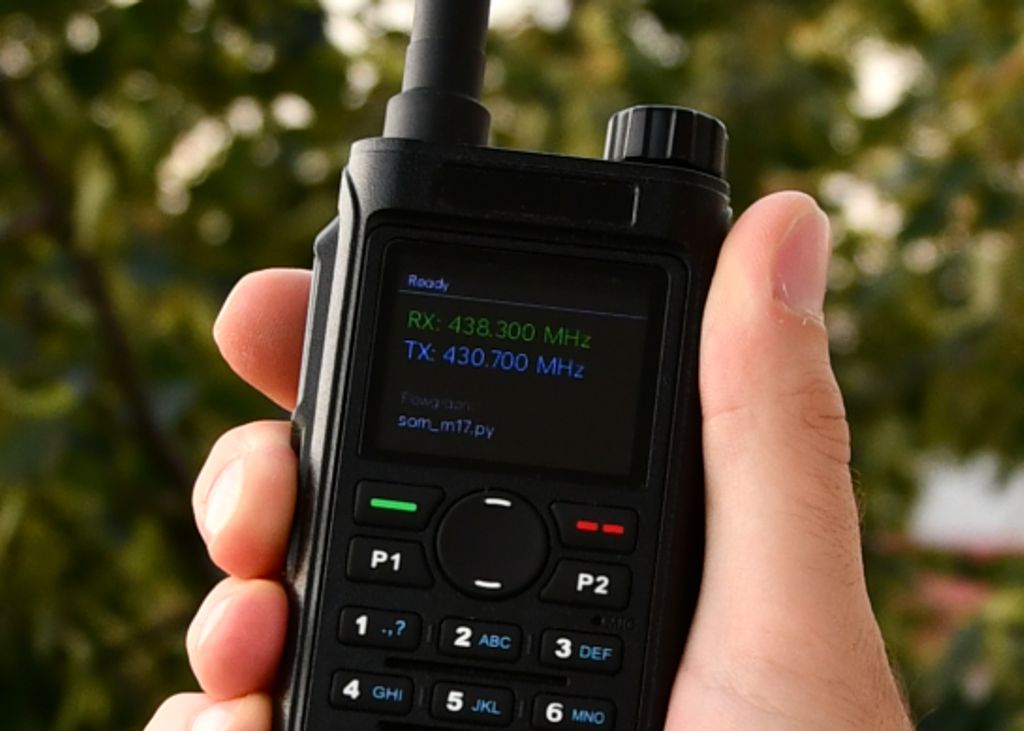
If the codec can be open, if the protocol can be open, and if the software can be open, is it possible to imagine a radio designed from the very beginning as an open platform? LinHT was born precisely from this idea.
Not a radio running Linux, but Linux using a radio
The traditional way of conceiving a radio device is quite simple: the hardware is the core of the system, while the software mainly performs management and control functions. In recent years, however, the evolution of SDR (Software Defined Radio) technologies has progressively changed this paradigm. More and more functions that were once implemented through dedicated circuits are now realized through software, DSPs and programmable processors, and the radio has increasingly become a computer system interacting with the radio frequency world.
LinHT takes this evolution one step further.
It is not simply a radio that uses Linux as a supporting operating system: it is a Linux environment equipped with a radio section that can be used as an experimentation platform.
This difference is conceptually important.
The goal is not only to provide the operator with a device offering specific functions, but to create a system in which the user can understand, modify and develop new operating possibilities.
A philosophy already seen in digital amateur radio
At first glance, this approach might seem very far from the traditional amateur radio world: a radio controlled by an operating system, with complex software and a strong computing component, could indeed make some members of the old school uncomfortable.
This reaction is understandable. Those who began their journey building valve equipment, modifying circuits or experimenting directly with electronic components might see this evolution as a departure from the traditional concept of radio.
But perhaps the problem comes from confusing amateur radio with a specific technology. I also started in an era when vacuum tubes were still a fundamental part of the technical culture of our hobby, but over the years we have seen the arrival of transistors, digital synthesizers, DSPs, SDRs and systems increasingly based on software. Every technological transition has generated similar discussions, and every new technology seemed to challenge the traditional way of doing radio.
Yet the fundamental point has always remained the same: the possibility of experimenting with and understanding what we use. In this sense, LinHT does not represent a break with the past, but rather a possible evolution of it.
The parallel with FT8
An interesting example comes from one of the most widespread digital modes of recent years: FT8.
When we use FT8, we normally accept that a significant part of the communication is managed by the computer. The software handles time synchronization, message encoding, signal analysis and the decoding of signals that are often below the threshold of human perception.
Yet nobody questions that FT8 is an amateur radio mode.
The reason is simple: the computer has not replaced the radio, it has expanded the possibilities offered by radio. The signal still travels through the radio medium, with all the physical characteristics of electromagnetic propagation.
From a philosophical point of view, LinHT follows a similar path: it does not eliminate radio, but integrates radio within an open computing platform.
The question, therefore, should not be:
How much computing technology is inside a radio?
but rather:
How much control do we still have over the technology we use?
A radio designed as a platform
In a traditional commercial device, the manufacturer decides which functions to implement and which possibilities to offer to the user. This model has clear advantages, allowing the creation of reliable, certified and easy-to-use products. It is also one of the reasons why systems such as DMR, D-Star and C4FM have achieved such widespread adoption.
LinHT proposes a different model: the device is not seen as a finished product, but as a foundation on which to build. The possibility of using a Linux environment opens scenarios that go beyond simple voice communication. Developing applications, experimenting with protocols, integrating software tools or modifying the behavior of the device become possibilities available to the community.
This does not mean that every operator must necessarily program or modify their own equipment, just as not everyone builds antennas or designs electronic circuits. It simply means that this possibility exists.
And it is precisely this possibility that represents one of the most interesting aspects of the project.
The value of open hardware
An important element of LinHT is that openness does not concern software alone, because the concept of open hardware extends the philosophy of transparency to the physical design of the device. Knowing how a radio is built, which components it uses and which design choices have been made means restoring a more direct relationship between the user and the technology; not necessarily in order to reproduce every single part of the device, but to be able to understand it.
It is the same spirit that has accompanied amateur radio for decades.
A radio amateur has never needed to build everything they use in order to appreciate technology, but the possibility of doing so has always represented a fundamental characteristic of our hobby.
Not only M17
It is natural to associate LinHT with the M17 world, since both share a philosophy based on openness and experimentation; however, it would be reductive to consider it simply the radio for M17: the value of the project goes beyond a single protocol.
The real idea behind LinHT is that of a radio as an open platform, where different systems and different applications can find space. M17 represents an important example of this philosophy, just as Codec2 has been an example of the concept of an open voice codec.
But the principle is broader: technology should not only be used, it should also be studied.
A possibility, not a replacement
It is important to clarify one point.
LinHT does not necessarily represent the future of digital radio, and it is not certain that it will ever become as widespread as the commercial systems currently available. I do not believe that this is its main goal.
The value of a project like this is not measured only by the number of devices sold or by the number of users who will adopt it. Its value lies in demonstrating that there is still room for a different approach. An approach in which technology is not only a finished product, but also an object of study and experimentation.
As of today, LinHT is an experimental project, not a finished product: hardware revisions are still ongoing, the software is continuously evolving, and the community itself presents it as such: a tool designed for those who want to explore, not a device ready for everyday emergency use or operational networks. But this should absolutely not be considered a limitation to hide: it is instead an integral part of its meaning.
A project still in the making demonstrates better than any mature product that the goal is not to compete in the market with commercial equipment, but to keep a door open: the possibility of having a radio that can still be taken apart, modified and fully understood, with all the imperfections and limitations that this inevitably entails at this stage.
Curiosity as the central element
Looking back at the journey covered in this series of articles, LinHT represents a natural point of arrival. We started from digital voice and ended up discussing open protocols, codecs, software and hardware. The central theme, therefore, has never been a specific technology: the real theme has always been the relationship between the radio amateur and technology.
Because amateur radio has never been defined by the equipment used at a given moment in history: it has always been defined by the curiosity to understand how things work, by the desire to experiment and by the possibility of creating something new.
Whether in front of us there is a vacuum tube, a DSP, an FPGA or a small Linux computer connected to a radio, the principle remains the same.
Technology changes.
Curiosity does not.
The title image is courtesy of m17foundation.org