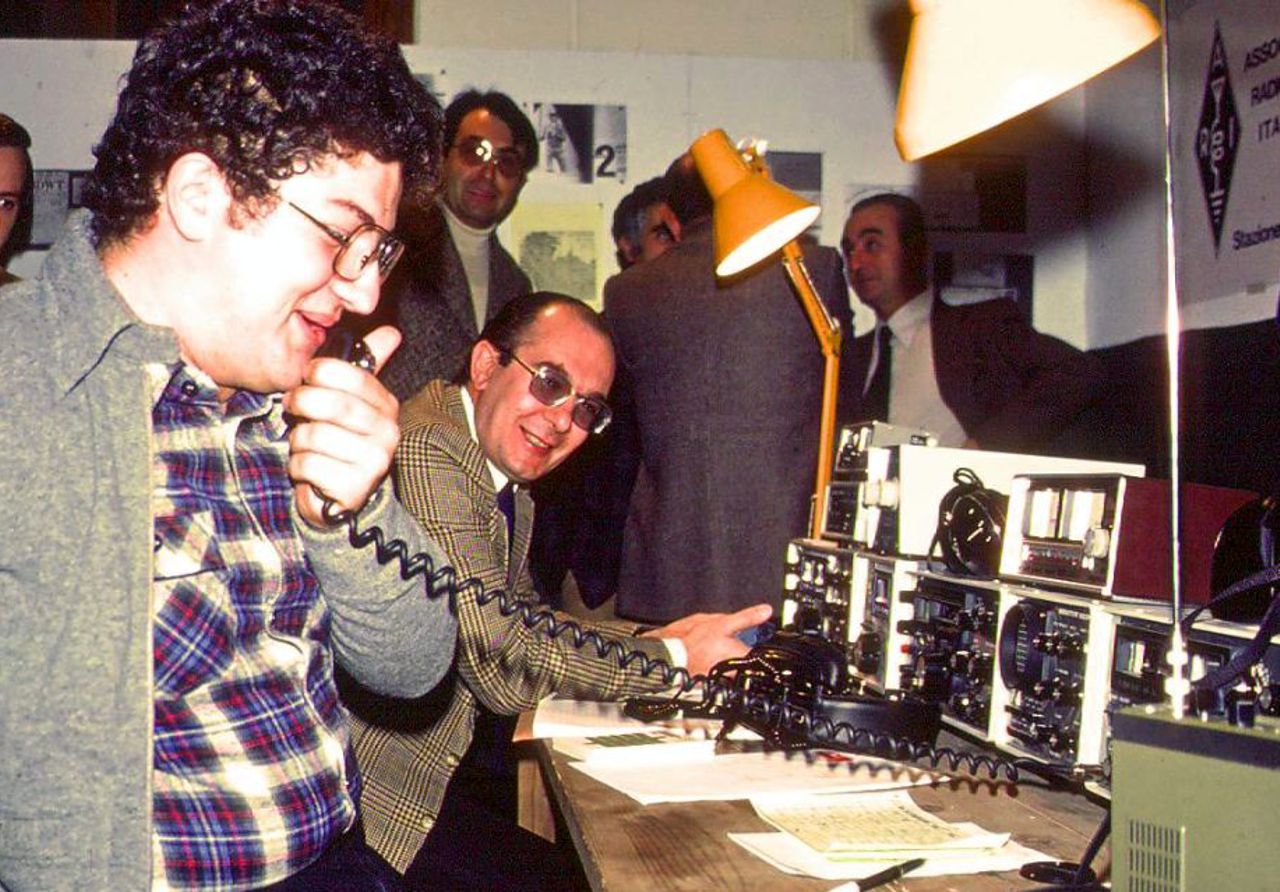
My name is Giorgio Rutigliano, and I am a radio amateur with the callsign I8ZSE.
I have been active in amateur radio since 1972, and since the late 1970s I have been deeply involved in digital modes, from RTTY and packet radio to more recent systems such as PSK31, FT8, and beyond.
I took an active part in the development of the first Italian NET/ROM packet network and, as early as the 1980s, I connected my packet BBS to the FidoNet network, building one of the very first bridges between dial-up BBS systems and digital radio communications.
I have always believed in the value of associations and community. For over forty years I was a member of ARI, included in its Honour Roll, and I was one of the founders of the Potenza section. I left with regret, as over time I perceived a growing difference in vision: unlike hierarchical structures, I believe in a participatory and horizontal approach to amateur radio, where every member is an active part of a shared project-an idea that closely reflects the free and collaborative spirit of the open-source world.
In November 1980, during the earthquake that struck Irpinia and Basilicata, I took part in emergency radio operations, helping to maintain communications during one of the most difficult and meaningful moments for our community.
I have always been an experimenter, with my gaze firmly set on the future of technological evolution. Profession and passion have often overlapped: I work as a Linux system administrator and developer, while on a personal level I began programming in the early 1970s on a Texas SR-52 calculator. Since then, I have maintained a pragmatic, substance-oriented approach, following the KISS philosophy (Keep It Simple, Stupid), which states that systems work best when they remain simple, understandable, and free of unnecessary complexity. For this reason, I have always been a strong supporter of Linux in the radio field, where reliability, transparency, and control are essential.
Today I operate mainly on HF, preferring low power (QRP) and the clarity of well-crafted signals over high power. I have achieved DXCC with over 200 confirmed entities, but what truly matters to me is the quality of each contact, the human exchange that every QSO can still represent, and the curiosity to keep experimenting, which I consider one of the most beautiful aspects of this hobby.
With HamLinux, I wanted to continue this lifelong journey: building an environment designed for fellow radio amateurs, where technology is not an obstacle but a discreet support, designed according to the KISS philosophy and focused on ease of use. A bridge between radio and computing, between tradition and innovation, and between people who share the same curiosity and passion for experimentation.