The radio is one of the most fascinating and enduring inventions in the history of technology. Born at the dawn of the twentieth century, in an era when long-distance communication was still tied to telegraph wires, the radio made it possible to transmit information without a physical connection, exploiting the ether – that immense invisible space that today we fill with signals, voices, and data.
Within this long history lies amateur radio, the activity carried out by radio amateurs: people who, out of passion and technical curiosity, explore the means of radio communication, experiment with new technologies, and keep alive the culture of self-construction and scientific discovery.
Radio as a tool of knowledge
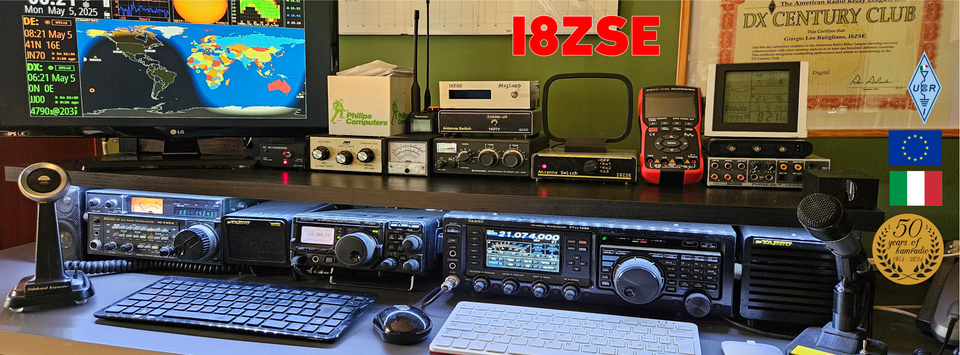
At first glance, radio may seem like a medium of the past, surpassed by the internet, mobile telephony, and social networks. In reality, radio is an extraordinarily alive and versatile technology, which has evolved alongside advances in electronics and computer science.
The radio amateur is not a simple “radio talker”: they are a researcher, a technician, an explorer of the ether. They study how radio waves propagate, experiment with new modulations, build antennas and receiving devices, develop software to decode signals and optimize transmissions.
Amateur radio is a technical training ground that unites theory and practice, a place where physics, electronics, and computer science meet.
Radio waves and the invisible language of the ether
At the base of everything lies a simple but powerful concept: an electrical signal, varied over time, can be radiated into space in the form of electromagnetic waves.
These waves travel at speeds close to that of light, cross immense distances, and can reflect, scatter, or be absorbed depending on the frequency and atmospheric or ionospheric conditions.
The world of radio amateurs moves across a wide spectrum ranging from long waves (kHz) to microwaves (GHz). Each band has its own propagation characteristics: there are frequencies that bounce off the atmosphere and allow intercontinental connections with minimal power, and higher frequencies that behave almost like light, requiring optical visibility between points in contact.
From analog to digital
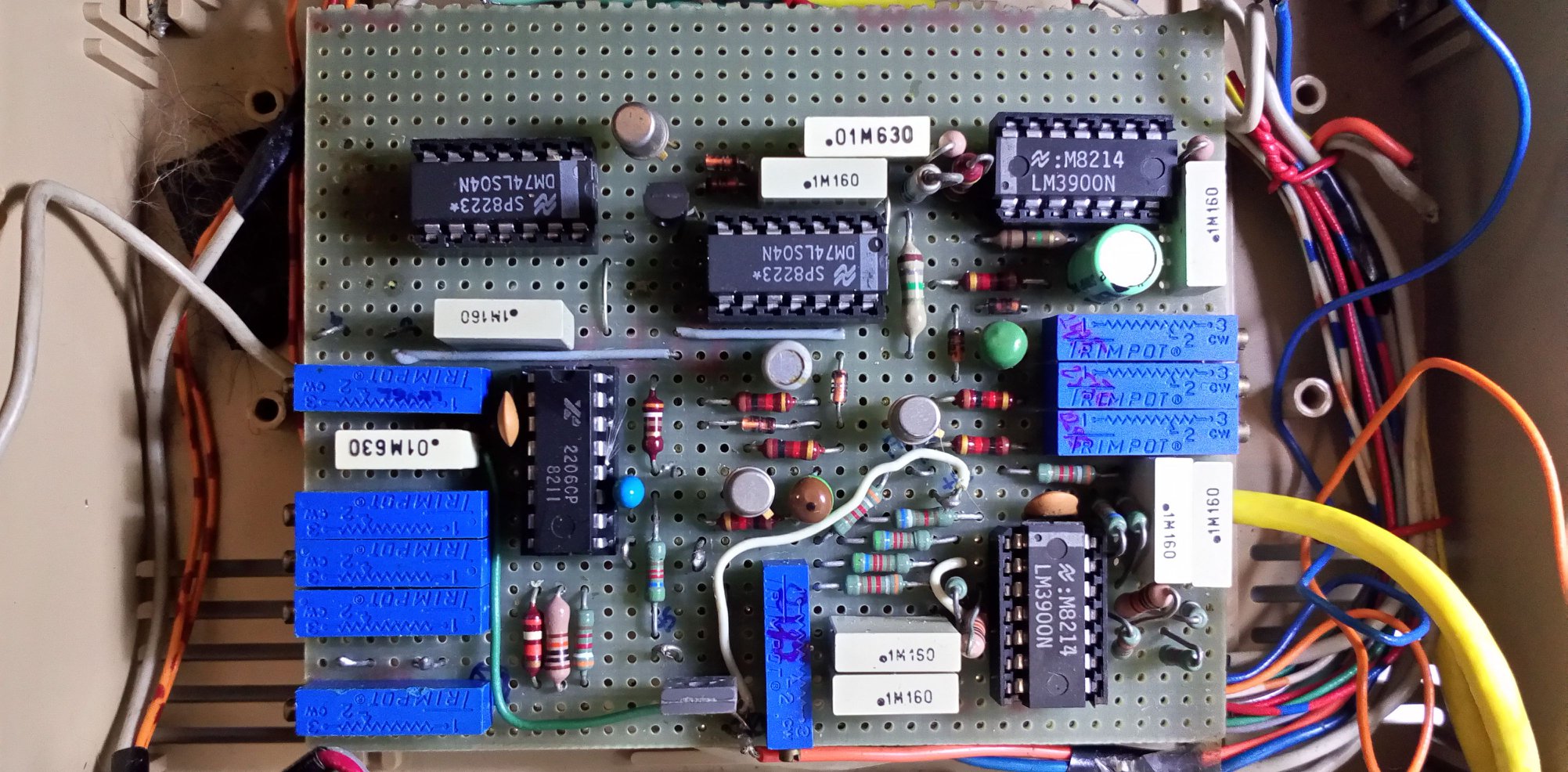
For decades, radio communication was analog: voice or telegraphy signals were transmitted by modulating the amplitude or frequency of a carrier wave. However, with the advent of computers and digital techniques, radio experienced a new revolution.
Today, much of amateur radio activity takes place digitally, through signals composed of sequences of bits representing encoded information.
This change is not only technological but also cultural: radio has become a bridge between the world of classical electronics and that of computer science.
Digital modulations – such as PSK, FSK, QPSK, or OFDM – allow information to be transmitted more efficiently and with less susceptibility to interference. Moreover, digital signal processing makes it possible to extract information even from extremely weak signals, often imperceptible to the human ear.
Thanks to protocols such as FT8 or JS8Call, today it is possible to make contacts thousands of kilometers away with just a few watts of power, exploiting synchronization and error correction algorithms that compensate for the variability of the ether.
The new frontiers
One of the most important developments in recent years is Software Defined Radio (SDR).
Traditionally, a radio receiver or transmitter was built with specific circuits for each function: filters, oscillators, demodulators, amplifiers. SDR overturns this paradigm: much of the signal processing takes place in software, thanks to high-speed analog/digital converters.
This means that the same hardware can become, depending on the program used, an HF receiver, a spectrum analyzer, a digital decoder, or an automatic repeater.
In this context, radio becomes an IT tool, programmable and flexible, open to innovation and integration with the world of computers and networks.
Alongside SDR, digital amateur radio networks have spread, connecting stations and repeaters via the Internet, creating true “hybrid networks” between ether and IP.
Systems such as D-STAR, DMR, and Yaesu Fusion allow combining the immediacy of radio with the reliability of data networks.
The modern radio amateur, therefore, no longer operates only “in the ether,” but moves in a hybrid ecosystem where radiofrequency and computer science coexist.
Experimentation as a driving force
What distinguishes the radio amateur from the user of a normal communication device is the experimental approach.
It is not enough to “talk on the radio”: the radio amateur wants to understand how and why a signal arrives, how to improve its quality, how to build more efficient antennas or more robust systems.
International regulations recognize this vocation: the bands assigned to the amateur radio service are spaces dedicated to experimentation and technical training.
In many cases, discoveries or innovations born in the amateur field – such as satellite communication, packet radio networks, or the first mesh network experiments – anticipated developments later adopted in the professional and commercial world.
Radio in the 21st century: between Earth and space
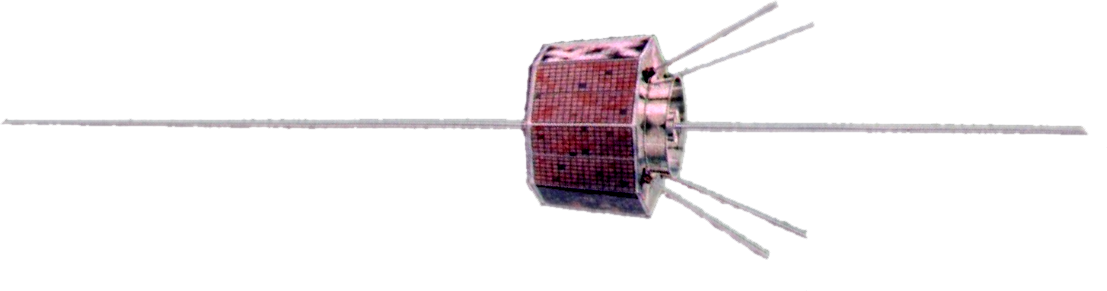
Another fascinating field is amateur satellite communications.
For decades, amateur radio organizations have built and managed small satellites (the so-called OSCAR), accessible to anyone with the appropriate equipment. One of our satellites, Oscar 7, launched in 1974, is currently the longest-lived operational satellite in orbit, with over 50 years of activity.
These satellites orbit the Earth and enable intercontinental connections even with small antennas and minimal power.
In recent years, the miniaturization of electronics and the reduction of costs have made it possible to send experimental microsatellites and CubeSats, often designed by universities and amateur radio associations.
At the same time, digital techniques have enabled the birth of innovative communication modes, such as internet radio (Echolink, AllStarLink) or network-defined radio (WebSDR), which – although in my opinion somewhat distort amateur radio activity – allow receiving or transmitting signals from anywhere in the world, controlling a remote station through the web.
All this keeps curiosity and the spirit of experimentation alive, adapting it to the contemporary technological context.
Amateur radio and digital culture
Modern amateur radio is also an extraordinary training ground for those approaching technology as self-taught.
Studying and practicing radio means experiencing firsthand concepts of electromagnetism, electronics, digital coding, communication protocols, and computer networks.
Many professionals in IT, telecommunications, or cybersecurity – and the author of these lines is an example – started out precisely as radio amateurs: radio offers a concrete laboratory where theory and practice meet, where it is possible to see (and hear) physics in action.
Today, with just a few components and a computer, it is possible to receive the entire radio spectrum – from broadcast transmissions to weather sondes, up to signals from weather satellites or space stations.
Interest in radio hacking, signal analysis, and digital decoding intertwines with amateur radio ethics, based on knowledge sharing and respect for technical and legal rules.
In a world where everything seems invisible and automated, radio gives us back the awareness that behind every communication there are real waves, energy, and knowledge.
The human dimension
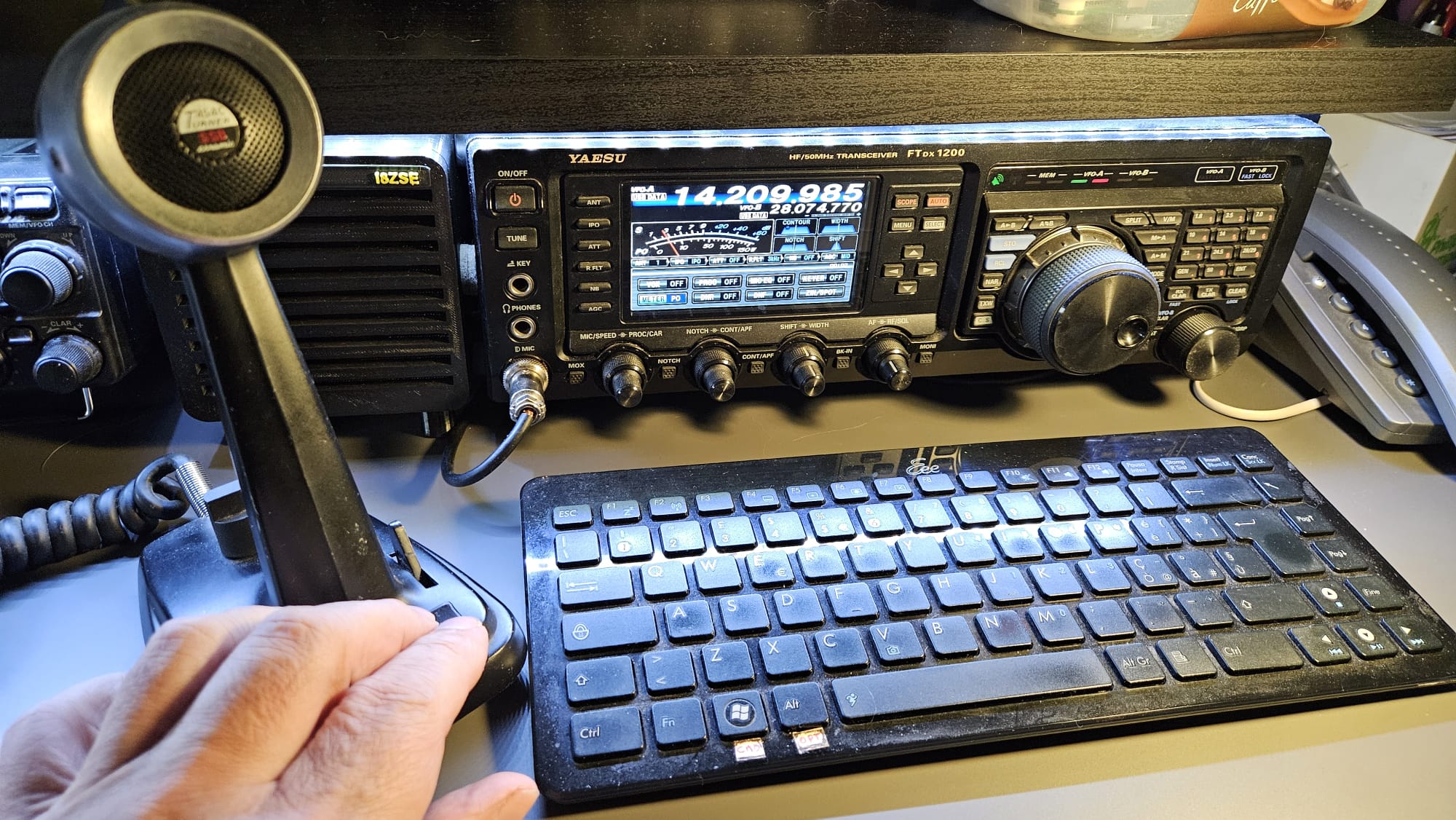
We must not forget, finally, that radio is also human communication.
Behind every connection, behind every “CQ” call, there is a person who answers.
Amateur radio networks are activated in cases of emergencies, disasters, or interruptions of conventional communications, providing support and coordination where other systems fail.
This aspect of service to the community is a pillar of amateur radio and one of the reasons why the activity is recognized and regulated internationally.
Experimentation, knowledge, and freedom
Amateur radio is a free space.
Not free in the sense of “without rules”: amateur radio activity is regulated worldwide by international agreements and national laws that establish frequencies, power levels, and usage modes.
To operate as a radio amateur it is not enough to purchase a device: it is necessary to pass a qualification exam, which verifies basic knowledge of electronics, propagation, and regulations, and obtain an official license issued by the competent authority (in Italy, the Ministry of Enterprises and Made in Italy).
With the license a personal callsign is assigned, a unique identifier recognized internationally – a sort of “radio plate” that accompanies the operator in all their activities.
This regulation ensures that amateur radio communications take place in an orderly, safe way and with respect for the assigned bands, while at the same time allowing the technical and scientific experimentation that has always been at the heart of amateur radio.
Beyond this entry barrier, which is justified by the use of a non-trivial technical medium, it is a completely free world in the highest sense of the term: free to learn, to build, to share.
The radio amateur does not only buy equipment: they understand it, modify it, measure its performance, and discuss it publicly.
It is the same spirit that animates the open-source world: knowledge as a common good, experimentation as a method, collaboration as a force.
With Linux and free tools, radio returns to being what it was at the origin: a field open to creativity.
From a simple digital QSO to building network nodes, from weather monitoring to amateur space missions, everything becomes accessible.
Free software does not impose limits but opens doors wide: every program can be analyzed, adapted, and improved, just like a self-built radio circuit.
Radio as a bridge between worlds

In an era of invisible connections and increasingly closed services, radio represents a rare space of independence.
A radio signal does not pass through commercial servers, does not require a subscription, does not depend on external infrastructures: it is a direct link between people.
This spirit of freedom, of technical autonomy, is the same that fueled the birth of Linux and the open-source movement.
HamLinux wants to keep this bridge between worlds alive: between electronics and software, between science and passion, between the analog past and the digital future.
Because radio, even today, is one of the purest forms of communication: invisible, universal, and profoundly human.
Recap
Amateur radio is much more than a technical hobby: it is a universal language that unites generations, cultures, and skills.
It is an open window on the ether, where physics, electronics, and computer science merge to create something concrete, measurable, human.
In the transition from analog to digital, radio has demonstrated an extraordinary capacity for adaptation, becoming fertile ground for scientific experimentation and technical training.
Those who approach radio today discover a world that dialogues with open source, free hardware, and global connectivity.
They discover that “doing radio” also means understanding how data travels, how information is transmitted under difficult conditions, how resilient communication is built.
And above all, they discover that in the era of instant communication, radio maintains something unrepeatable: the pleasure of technical and human encounter through a signal that crosses space, invisible but real.