The paradox of digital voice in amateur radio
When we talk about amateur radio, there are some concepts that immediately come to mind: experimentation, knowledge sharing, self-education and the freedom to understand what we use. This is, after all, one of the aspects that has always distinguished our hobby from a simple activity of using telecommunications systems.
Over the last twenty years, however, the world of amateur radio communications in VHF and UHF has undergone a profound transformation thanks to the spread of digital systems. Today it is possible to make contacts through worldwide networks using handheld radios with relatively affordable prices, exploiting radio and IP infrastructures that have pushed amateur radio into scenarios that would have been unimaginable only a few decades ago.
DMR, D-Star and C4FM are now established and widespread realities all over the world. They are technologically mature and reliable systems, capable of offering features that analog technology cannot provide. Yet, precisely here lies what I consider one of the greatest paradoxes of modern amateur radio.
Is amateur radio digital voice really “amateur radio”?
The question may sound provocative, but it deserves some consideration.
If we take any traditional analog system, an amateur radio operator can study how it works, understand every single element and, at least theoretically, build a completely independent implementation. We can build a CW transmitter, an SSB receiver or an FM transceiver starting from available technical documentation, modifying it and experimenting with different solutions.
With digital voice, things change significantly.
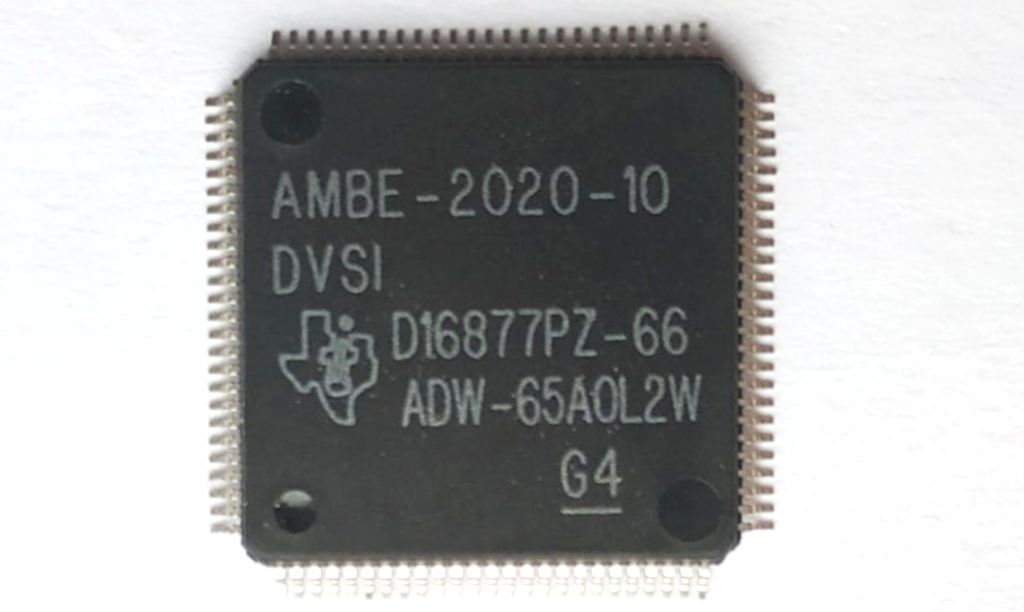
The three main systems currently used by radio amateurs share a characteristic that is often overlooked: they are all based, to different extents, on proprietary technologies. In particular, the core of these systems is represented by the voice codecs used to compress speech into a few thousand bits per second, allowing transmission over extremely narrow radio channels.
Of course, there is nothing “wrong” with using proprietary technologies. It would be intellectually dishonest to claim otherwise. Their widespread adoption has made it possible to build worldwide repeater networks, create affordable equipment and make digital voice accessible to thousands of radio amateurs.
The point, however, is another one.
A system can be perfectly usable without being completely understandable and studyable.
And this is where the paradox emerges.
The amateur radio service was born with the purpose of self-education and technical experimentation. Historically, we have always considered radio as something that can be understood down to the smallest component, modified, improved and even built from scratch. Today, however, we routinely use communication systems that contain real technological black boxes, whose external behaviour we can observe, but whose internal operation remains hidden.
Let us consider DMR, for example. Many people consider it an open standard because some of its specifications are publicly available and because it is widely implemented by numerous manufacturers. In reality, creating a fully compatible device requires the use of technological components that cannot be freely implemented.
The same applies, with different nuances, to D-Star and C4FM.
This does not mean that these systems are “less valid” from a technical point of view. It simply means that they represent a compromise between openness, practicality and commercial adoption.
It is a compromise that amateur radio has accepted, probably even enthusiastically, because the operational advantages are obvious. However, this aspect is rarely discussed when talking about digital voice.
Over the years, we have almost stopped asking ourselves whether a radio amateur should be able to fully understand the system they use. We have become accustomed to the idea that pressing the PTT button is enough, leaving sophisticated proprietary algorithms to do their job.
Perhaps there is nothing wrong with this. Or perhaps we have simply shifted the balance between experimentation and usage towards the latter.
Fortunately, in recent years, projects have emerged that attempt to recover some of the historical principles of digital amateur radio. Codec2 and the M17 protocol probably represent the most interesting attempt to create a completely open, documented and freely implementable ecosystem, bringing back to the centre the possibility of studying, modifying and experimenting with every single element of the communication chain.
In another section of my website I have already discussed the topic of voice conversion into digital format and the operation of speech codecs. In this section, instead, I will try to analyse the technologies currently available in VHF and UHF amateur radio with a broader perspective, not limited to equipment features or perceived audio quality.
We will try to understand what lies behind the acronyms we use every day and what technical and philosophical compromises each system brings with it.
My goal is certainly not to establish which system is “better”, but to understand how we arrived at the current technological landscape and ask ourselves a simple question that, perhaps, every radio amateur should consider at least once:
Can a communication system truly be considered amateur radio if we cannot fully understand it?
The topics covered in this section:
- How it works
- D-star
- C4FM
- DMR
- Three Philosophies
- Hotspot
- Codec2
- M17: a new frontier?
- LinHT, the open radio
- Beyond voice
 Info
InfoSlides from a course I held in 2017 at local ARI ham radio club about digital voice
