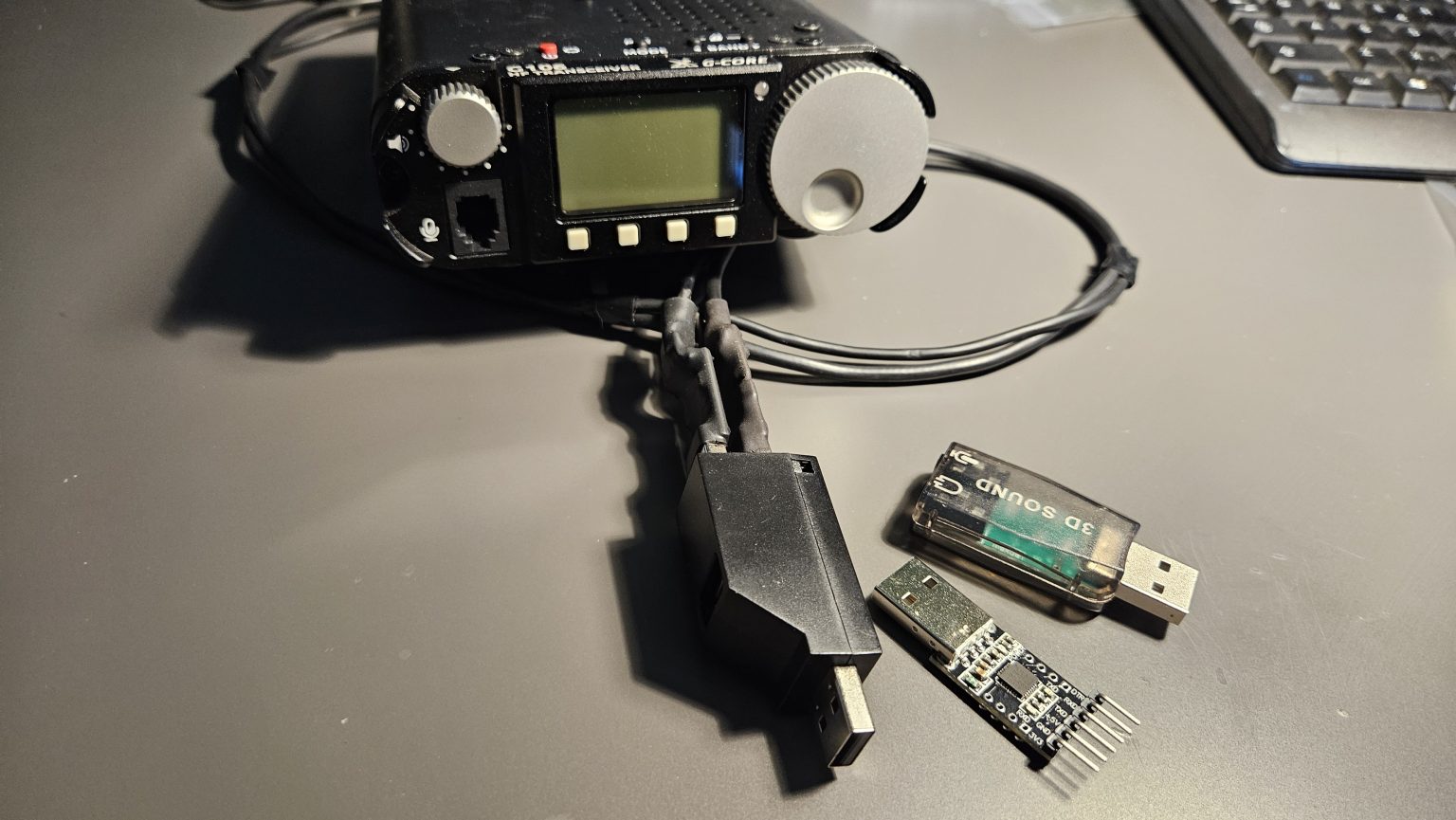
Digital modes interface
In the world of digital modes, two generations of transceivers coexist: modern radios, which connect to a computer with a simple USB cable and already include an internal sound card, a data interface, and full CAT control; and older radios, which require an external interface in order to communicate with a PC. This distinction is not merely a matter of convenience, but also reflects the philosophy with which manufacturers envisioned the relationship between radio and computer. Today’s radios are designed from the outset with digital modes in mind; yesterday’s radios, on the other hand, require a little more hands-on craftsmanship.
Commercial interfaces are widely available and generally work well, but there is nothing particularly mysterious about their design. With a modest amount of experience and a handful of basic components, it is possible to build equally effective solutions at home, often cleaner and better suited to a specific transceiver. After all, a digital mode interface is simply a bridge between three distinct domains: audio, data, and PTT. Understanding how these three elements work makes it possible to build a stable, reliable system tailored to one’s own operating style.
Audio
Audio is the simplest part and, at the same time, the one that tends to generate the most unnecessary concern. For most applications, a common USB sound dongle is perfectly adequate, provided it supports 48 kHz sampling and offers at least one input channel. Exotic specifications or unusually wide dynamic ranges are not required. What truly matters is the stability of the internal clock, since an unstable clock can introduce small frequency offsets that become troublesome in the more sensitive digital modes. Clock stability can be measured easily, and in practice almost all modern USB sound devices perform more than adequately.
Audio connections can be made directly to the transceiver’s dedicated input and output ports when available, or through simple resistive attenuators connected to the microphone and speaker circuits. Only in rare cases, when hum or ground-loop noise becomes an issue, is it necessary to insert 1:1 isolation transformers. Far more important is careful grounding: clean wiring, properly distributed grounds, and the avoidance of unwanted ground loops are worth more than any transformer.
Data
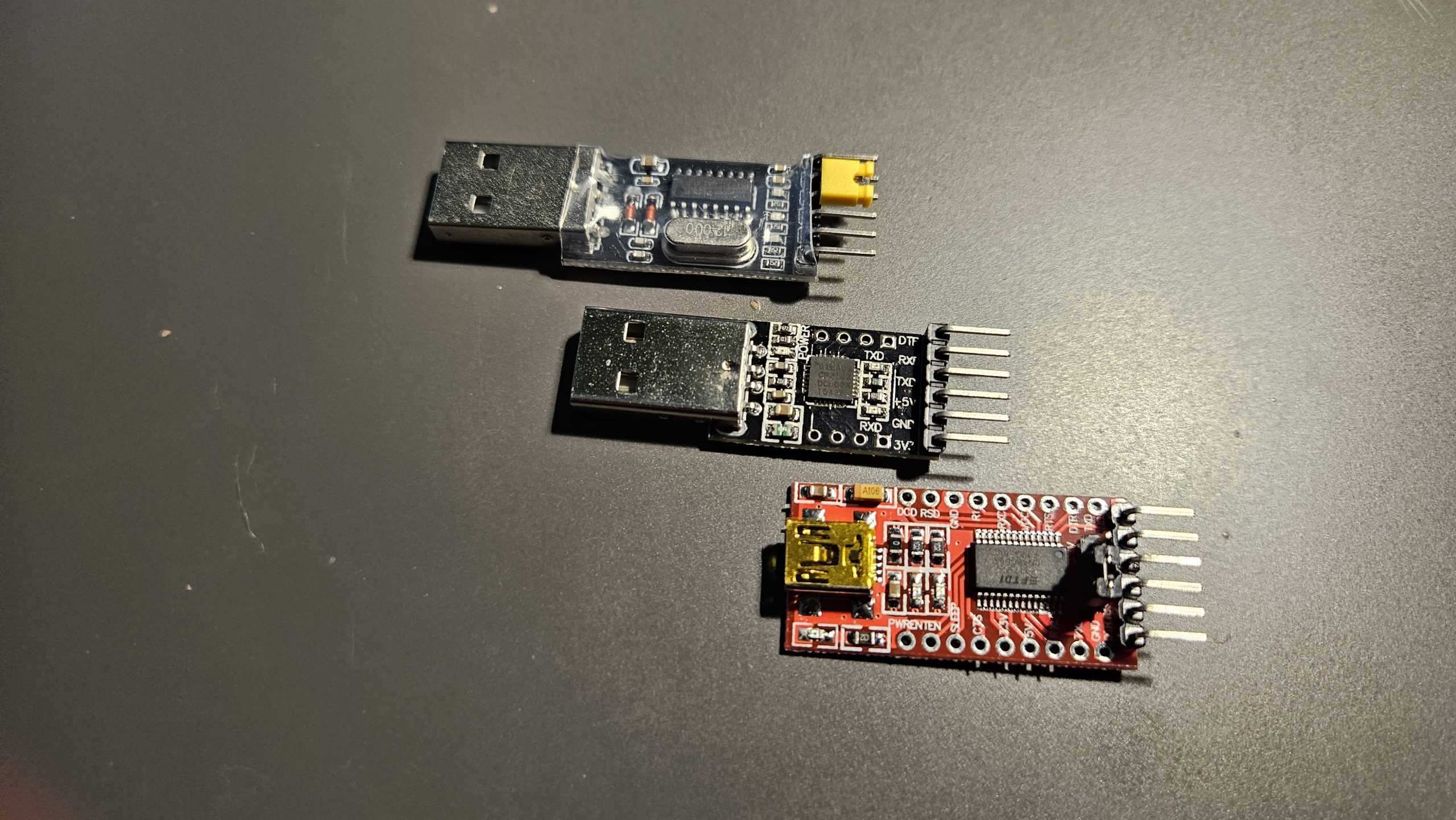
The second area concerns data communication. Here the situation is even more straightforward: nearly all radios provide a serial interface, either RS-232 on older models or TTL-level serial on more recent ones. In both cases, all that is required is a suitable adapter—such as the ubiquitous Prolific-based converters or equivalent devices—to establish a stable connection recognized by the operating system. Once the link is established, the radio becomes a controllable device capable of receiving commands and reporting its operating status.
PTT
The third element is PTT, which represents the point where the digital world meets actual transmission. The most elegant and modern solution is to control PTT through CAT commands, using the same data cable already employed for radio control. This eliminates the need for dedicated switching lines, avoids additional delays, and maintains complete control over the transceiver.
However, older radios often lack CAT control and therefore require an external switching mechanism. In such cases, a small dedicated interface can be used, such as the one I built for the IC-720A: a simple circuit that can be easily assembled at home and allows reliable PTT control without placing unnecessary stress on the radio’s internal circuitry.
It is strongly recommended to avoid using VOX, since you could inadvertently key the transmitter if another application were to send audio to the sound card.
In Summary
Building or selecting a digital mode interface means understanding how three components—audio, data, and PTT—interact with one another and with the transceiver. Commercial solutions are convenient, but a home-built approach often delivers cleaner results that are better adapted to a specific radio. The key is to keep the overall picture in mind: audio requires clock stability and proper grounding, data communication requires little more than the correct adapter, and PTT finds its most elegant implementation through CAT control, except when the age of the radio necessitates a more traditional approach.
Share this content:
Post Comment