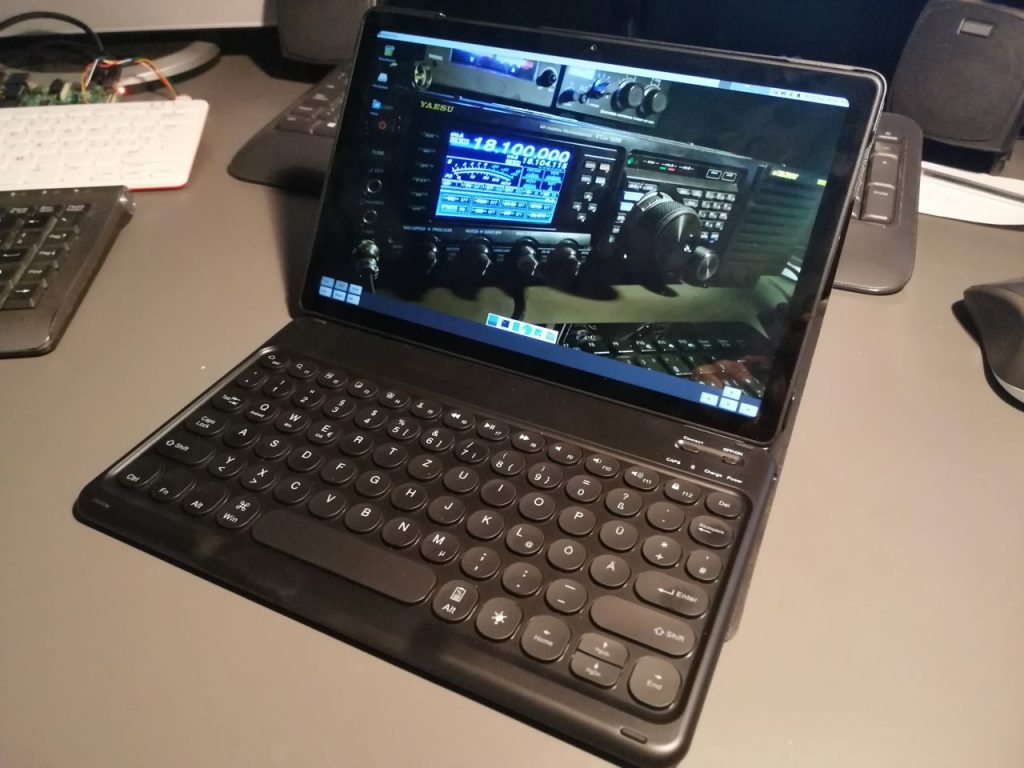
Why choose Linux for amateur radio operations
In recent years, Linux has become one of the most interesting—and often underestimated—choices for those involved in amateur radio. It is not simply about saving on licenses or following an “ideological” preference: the advantages are concrete, practical, and, most importantly, measurable in real-world operation.
Those who switch to Linux almost always do so for one simple reason: they want their system to work for them, not the other way around.
Real control, not perceived control
One of the most immediately noticeable aspects is full system control. With Linux, there are no forced updates at the wrong moment, nor hidden processes consuming resources right in the middle of a contest or during a DXpedition.
System behavior is predictable. And for radio operators, predictability is everything.
This translates into something very concrete: the ability to build fully automated and long-term stable stations. Not only home shacks, but also beacons, repeaters, or remote stations can run for months without intervention, with a level of reliability that is difficult to achieve on other systems without complex configurations.
Powerful software (and often better)
A persistent misconception is that Linux “lacks software.” In amateur radio, the opposite is often true.
There is a rich and mature ecosystem of dedicated applications:
- logging and contesting tools that are advanced and actively maintained
- fully supported and optimized digital modes
- station control through standardized libraries
- highly advanced SDR and DSP environments
Many of these programs are not only free: they are developed by radio amateurs for radio amateurs, and therefore designed with a much more operationally realistic mindset.
Doing more with less
Linux has another often overlooked advantage: it makes much more efficient use of hardware.
Machines considered obsolete become fully usable again. A computer that struggles to boot on other systems can become a reliable node in a radio station.
This allows, for example:
- dedicating one PC per function (logging, packet, SDR, antenna control)
- reducing power consumption
- reusing existing hardware, lowering costs
With minimal investment, it becomes possible to build a modular, scalable, and surprisingly powerful station.
The real strength: networking and automation
Modern radio is increasingly integrated with networking: clusters, log synchronization, remote access, distributed systems.
This is exactly where Linux excels.
Configurations that are complex or fragile on other systems become natural:
- multi-operator stations
- secure remote access over the internet
- integration with packet radio and online services
- full automation of operational workflows
Linux was born as a network operating system, and that origin is still clearly visible.
Community and security
The Linux community in amateur radio is active and highly skilled, and represents a major added value. Solutions are shared, improved, and continuously adapted.
From a security standpoint, Linux provides solid foundations: greater access control, reduced exposure to widespread threats, and more conscious update management—all essential aspects for remote or network-connected stations.
What about complexity?
Today, it is much less than commonly believed.
Modern distributions are accessible and intuitive, allowing beginners to get started quickly even without deep experience. At the same time, they still offer full depth and customization for those who want to explore further.
And this is where an additional step comes in.
A ready-to-use solution: HamLinux 3
For those who want to approach Linux without configuring everything from scratch, there is an even simpler path: starting from a prebuilt system.
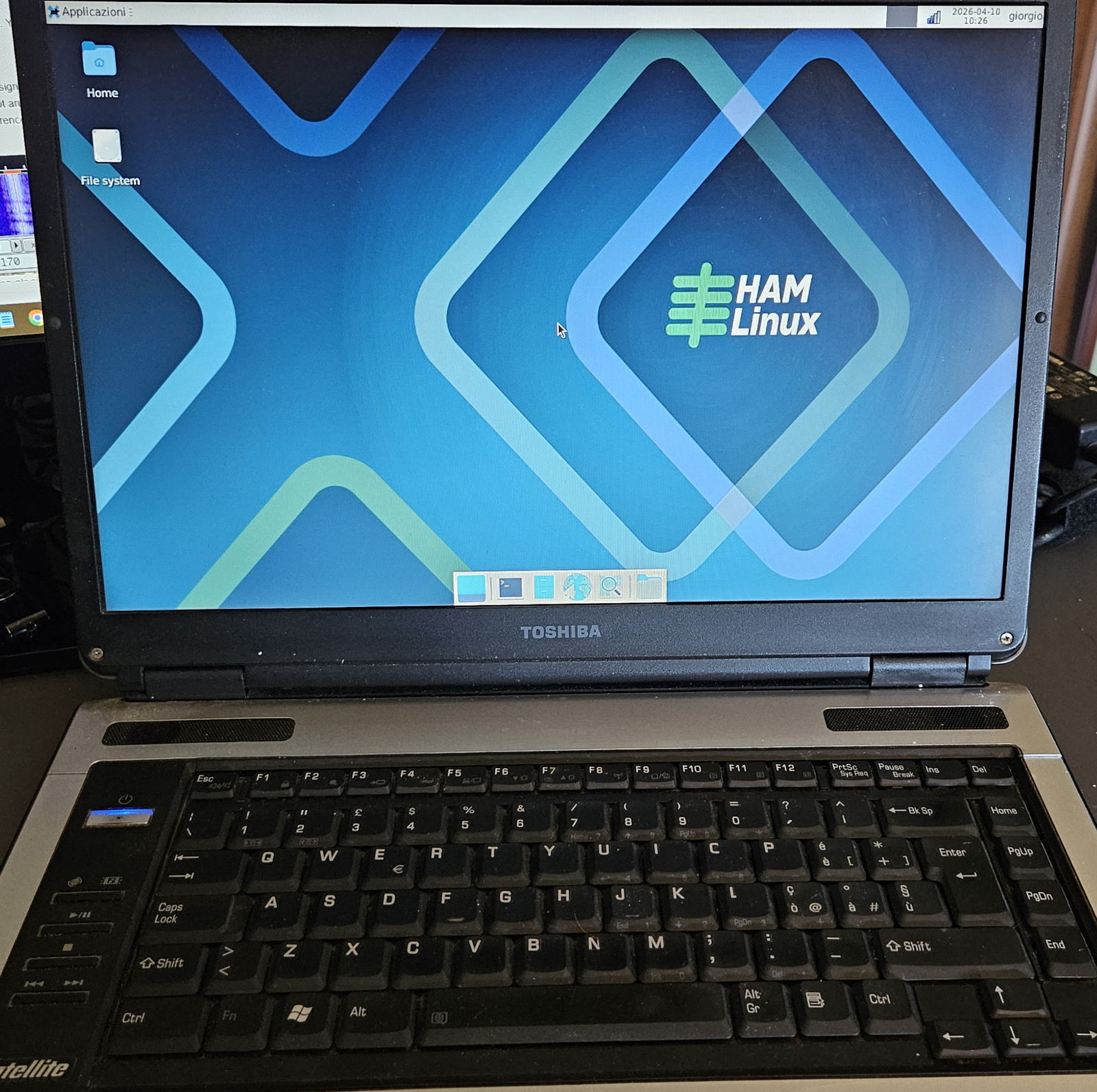
HamLinux 3 is a live, installable image I developed for both 64-bit PCs and Raspberry Pi, already fully configured for amateur radio use, designed for both station and mobile operation. The goal is to remove initial barriers:
- preinstalled and configured radio software
- immediate support for major interfaces and devices
- ready-to-use environment for digital modes, logging, and station control
- instant usability even in live mode
In practice, it allows you to go from theory to operational radio in minutes, while retaining all the flexibility of Linux.
In summary
Amateur radio is rapidly evolving toward digital operation, automation, and system integration.
In this context, Linux is not just an alternative: it is often the most solid and technically coherent choice.
And with solutions like HamLinux 3, even the initial setup becomes simple and accessible.
Because, at its core, Linux perfectly embodies the spirit of amateur radio: understanding, experimenting, and maintaining full control over your station.
Topics in this section:
Topics: