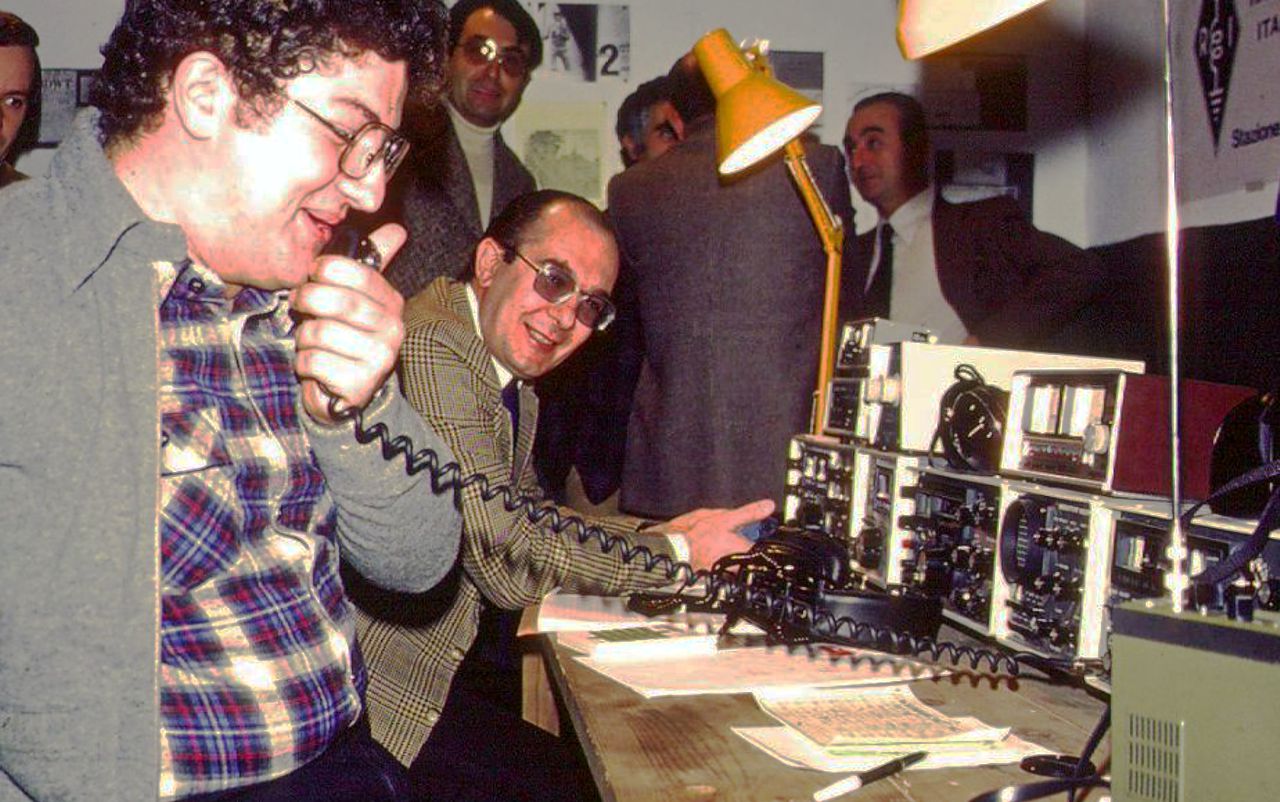
In every amateur radio station, the radio equipment represents the true operational heart: it is the point of contact between man and the ether, where passion, technology, and experimentation meet.
Around it revolves everything else – antennas, power supply, accessories, software – but it is the radio that concretely defines the operator’s possibilities: the sensitivity of the receiver, the purity of the transmitted signal, the frequency stability, the ability to adapt to different modes and bands.
Over time, equipment has evolved from simple analog tools to complex systems of processing and control, advancing hand in hand with electronic and computer technology.
Analyzing its evolution therefore means retracing the very history of amateur radio, from vacuum tubes and mechanical VFOs to modern direct-sampling SDR receivers, where the signal is no longer filtered by coils and crystals, but by digital algorithms.
Understanding how a radio works – and how it has transformed over time – is, in my opinion, fundamental to appreciating the deeper meaning of amateur radio: not only to communicate, but to experiment, understand, and improve what connects us to the invisible world of radio waves.
The 1950s-60s: the era of vacuum tubes
 In the post-war period, the amateur’s radio was entirely based on thermionic vacuum tubes.
Receivers were often single-conversion or double-conversion superheterodyne, with local oscillators stabilized by quartz or mechanically variable.
Transmitters, initially crystal-controlled and later VFO (variable frequency), used class C finals with AM modulation or pure CW.
Frequency stability was modest, heat considerable, but maintenance was “human”: every part could be measured, replaced, or even built at home.
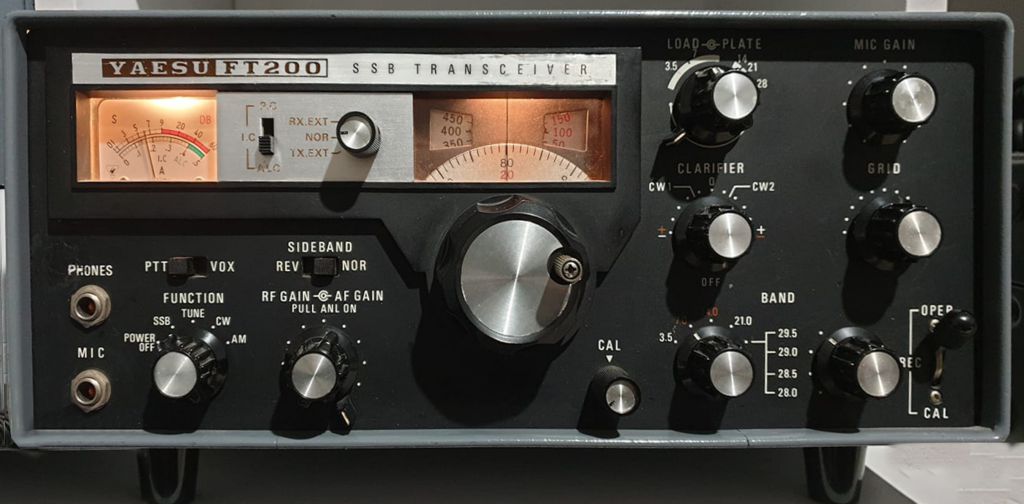
Historic brands such as Collins, Hallicrafters, Drake, and – in Italy – Geloso, produced equipment that today are icons: the Geloso G4/216 line, or the Drake “4” line represented the dream of many OM of the era. Generally, one operated with separate transmitter and receiver, hence the term “line.” But compact tube transceivers were also produced – my first rig, a Yaesu FT-200, was one of these.
It was the time of true “homebrewing,” of the soldering iron and the “quick glance” at the oscilloscope.
The 1970s: the hybrid era
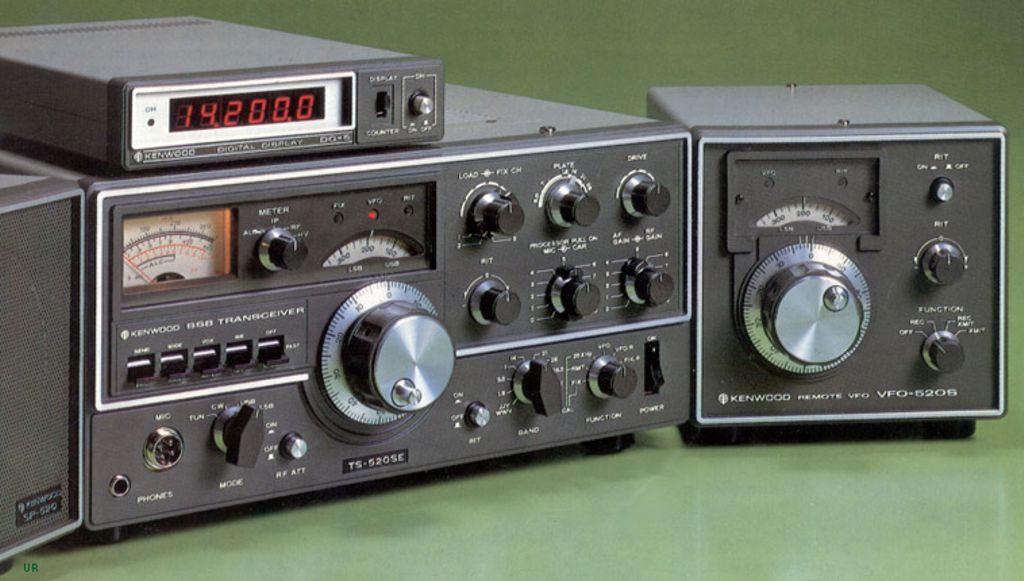 With the spread of low-frequency transistors and the first high-performance RF transistors, hybrid equipment was born: fully transistorized and using integrated circuits, except for the final power stage, which remained tube-based. This was a technical choice motivated by the robustness and still unmatched linearity of thermionic tubes compared to the semiconductors of those years.
Emblematic examples are the Kenwood TS-520 or the Yaesu FT-101 (aka FT-277), which also introduced the use of selectable quartz filters for various modes (CW, SSB, RTTY).
During this period, the integrated transceiver format (TX and RX in one unit) became established, and VFO stability improved significantly. Digital frequency counters began to appear, providing less approximate readings than vernier knobs, but the radio remained entirely analog.
The 1980s-90s: full solid state
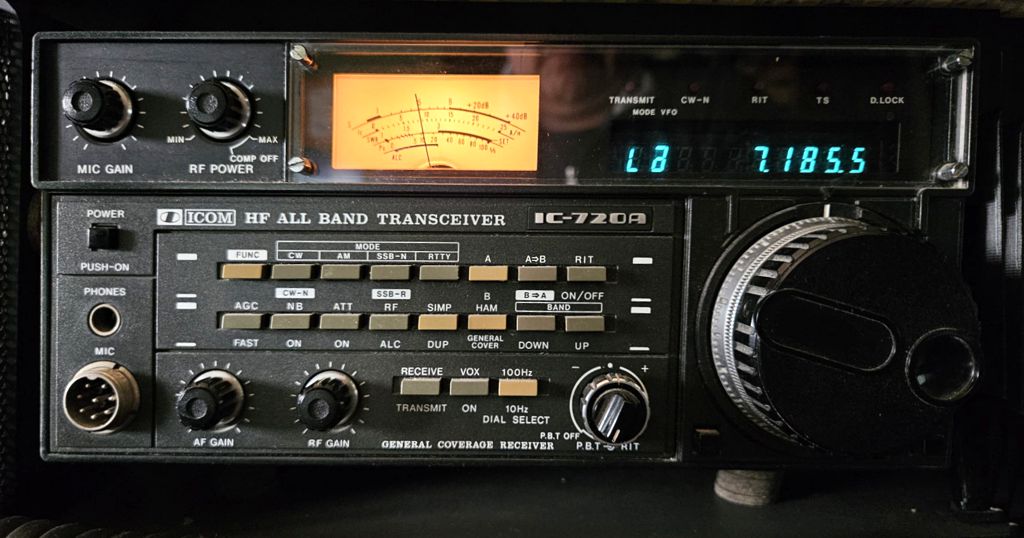 Thanks to the evolution of semiconductors, the full solid-state rigs appeared, transistorizing even the final stage, with 100 W power obtained first from RF bipolar transistors (such as the 2SC1969 or MRF458) and later from high-efficiency MOSFETs. The architecture also evolved significantly. Triple-conversion designs appeared, with balanced mixers, quartz or surface acoustic crystal filters (roofing filters), and digital VFOs (DDS or PLL) controlled by microprocessors. This approach allowed frequency storage, automatic scanning, and “intelligent” management of operating modes.
Notable examples are the Icom IC-720, Yaesu FT-757, Kenwood TS-450 – radios that marked the birth of the compact 100 W “all-in-one” rig, with digital tuning and display readout, powered at 12V. The user interface also began to change: knobs and switches decreased, menus, memories, and multifunction keys appeared. An important step for digital use, the first CAT (Computer Aided Transceiver) interfaces were implemented, enabling PC control of the main radio functions via RS-232 serial interface.
The 2000s: DSP arrives
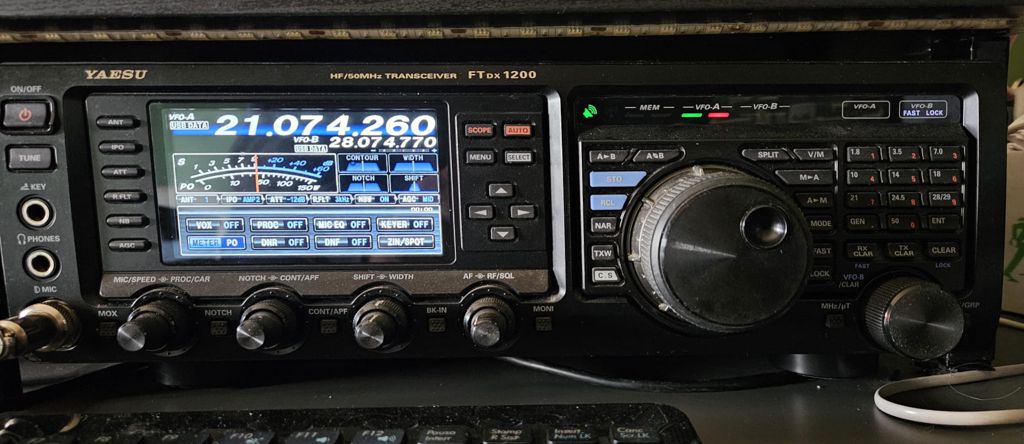 In the early 2000s, digital signal processing (DSP) began to take shape, destined to drastically improve the filtering capabilities of equipment produced until then. An addition that potentially improved receiver performance significantly – one of the main characteristics to consider when choosing a rig.
Models such as the Icom IC-756PRO, Yaesu FT-1000MP, or Kenwood TS-590 introduced advanced filtering, automatic notch, noise reduction, and other bonuses based on numerical signal analysis, practically unattainable with analog methods.
The 2010s-today: SDR
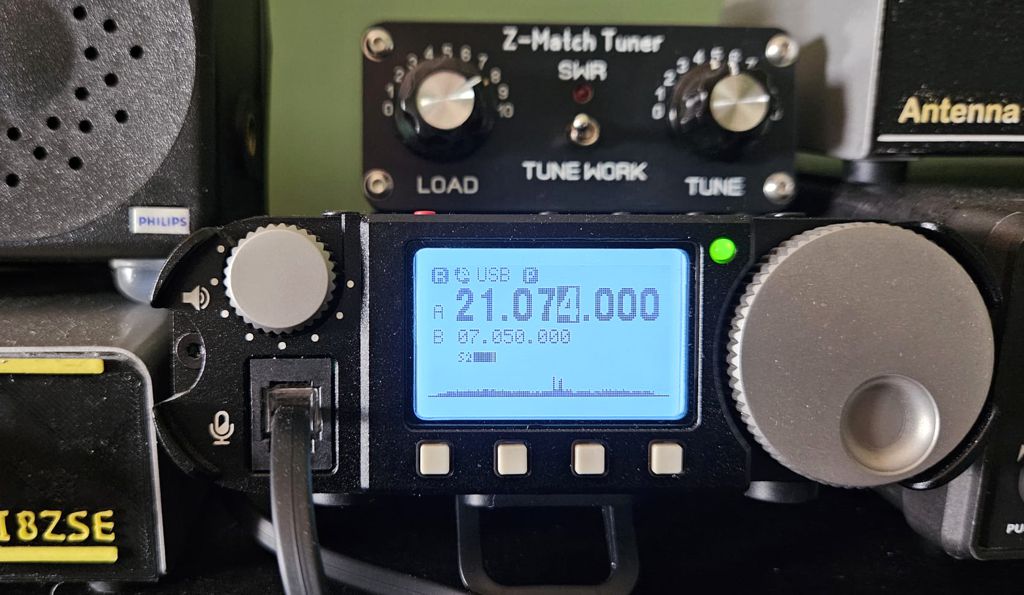 The natural evolution is Software Defined Radio (SDR), in which the radio is no longer a chain of circuits, but a set of analog-to-digital and digital-to-analog converters that transform the RF signal into data processed by software. Hardware handles only conversion and amplification. Everything else – demodulation, filtering, spectral analysis, modulation – is done via software.
SDR radios are divided into two major categories:
- Pure SDRs, which are black boxes to be connected to a computer running the management software
- Embedded SDRs, which have an internal management system and a command set similar to traditional radios
Unlike analog radios, designed to tune a single signal, SDRs sample wide slices of the radio spectrum and convert them into two digital streams (IQ), which are then processed to extract our signal. This easily enables eye-catching features – such as the panadapter, graphical spectrum display, or the waterfall, the time-based spectrum visualization.
Even more important is the fact that from IQ streams it is possible to reconstruct any type of modulation, allowing the rig to be updated via software and new features to be added without modifying the hardware.
And the future?
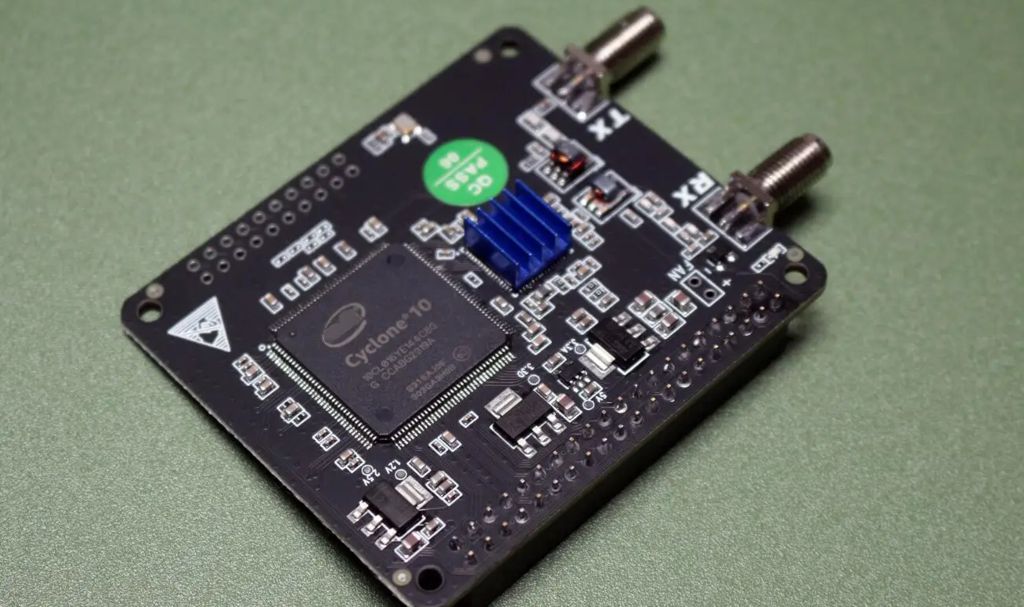 Paradoxically, with SDR we have returned to the pioneering spirit of the 1950s, but in digital form. While the creation of high-tech digital boards remains a niche reserved for a few, the availability of relatively low-cost products such as LimeSDR, Hermes-Lite, or Radioberry makes it possible to build high-performance rigs at home.
Amateur radio is once again a frontier laboratory, where electronics, computer science, and radio technology converge.